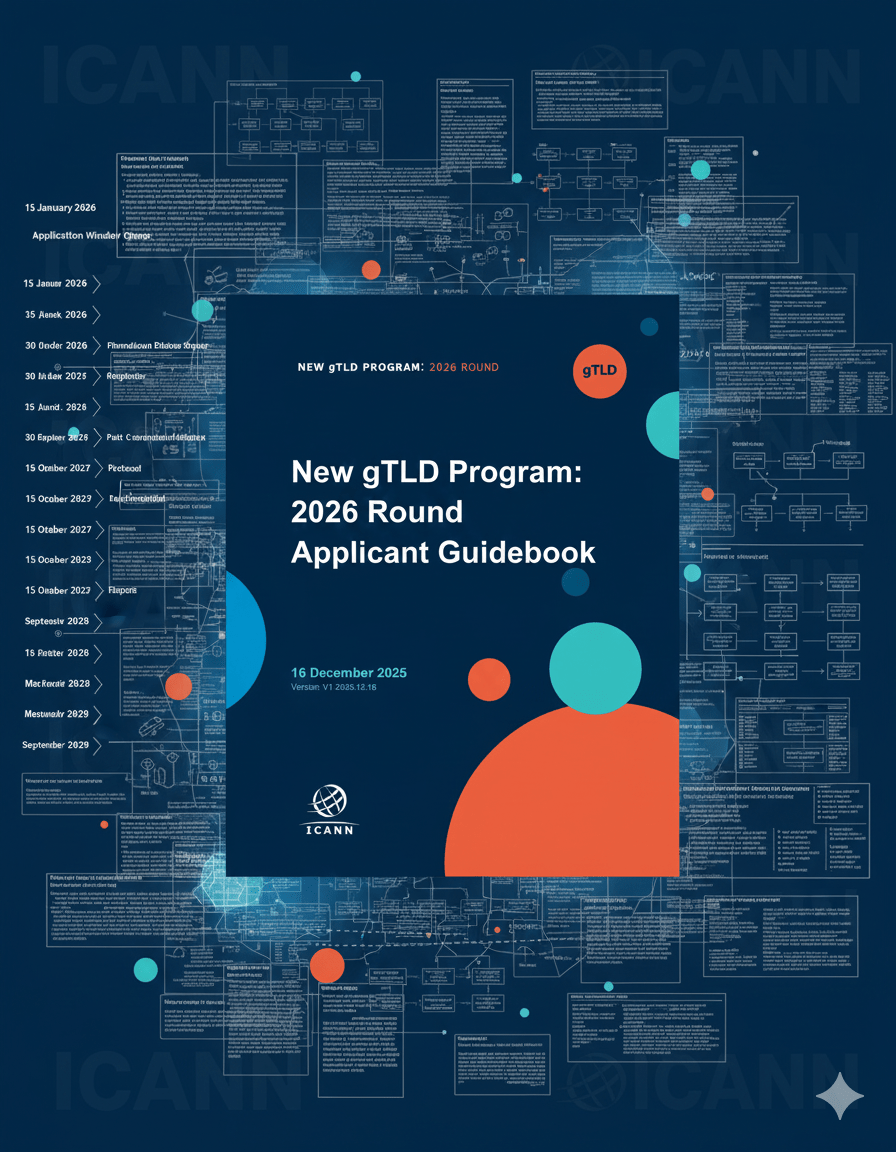
The new gTLD program 2026 Round Applicant Guidebook (“AGB”) is now final and has just been published by ICANN. The next round is no longer hypothetical; it’s a dated, documented, and rule-dense reality. For some organizations, this is a once‑in‑a‑generation opportunity; for others, it may quietly become an expensive, multi‑year distraction.
Should you still apply?
Yes, if you are clear-eyed about the trade-offs.
The 2026 AGB gives far more predictability than 2012, but also much less room to improvise. It locks in the 227,000 USD evaluation fee per application, defines how and when refunds might apply, and walks you through a long journey of evaluation, objections, potential contention, contracting, and years of compliance.
For serious applicants, there are real opportunities in this round:
- The revamped Applicant Support Program can lower entry costs and provide training and pro bono help if you genuinely qualify and can operate what you are asking for. (Note that the application submission period for this closes on 19 December 2025)
- The RSP Evaluation Program means you can plug into pre‑evaluated back‑end providers rather than building and defending your own registry stack from scratch.
- Replacement strings and a clearer contention framework give you more structured strategic options than in 2012, if you plan them early and understand the limits and timelines.
- The expanded GAC, community input, objections, and appeals machinery can become a moat for well‑designed public‑interest or community models, not just a source of friction.
There are also very real risks, especially for non‑portfolio players:
- Under‑estimating total cost: the 227k fee is just the start, once you add legal, RSP, potential objections/appeals costs, and three to five years of operating runway under the Base Registry Agreement.
- Misreading contention and replacement rules: Treating replacement strings as a late‑stage escape hatch, or under‑estimating the cost and duration of ICANN‑run contention resolution, could lock you into a multi‑year, capital‑intensive deadlock.
- Treating GAC and community processes as an afterthought: It might only take one Early Warning, poorly drafted RVC, or misaligned policy to derail all that internal work and force painful application changes.
Just as important: it is no longer enough for you and/or potential investors to “like the string.” The AGB bakes financial and operational scrutiny into the process, and the market will add its own verdict later! (There are more than a few applicants from the last round that can probably say, “I’ve been there, done that, and I still have the launch swag t-shirts!”)
So, I suggest pressure‑testing your business case against conservative revenue projections, not optimistic registration curves from launch press releases.
By all means, validate your demand. Model downside scenarios, slow adoption, serious objection, drawn‑out contention, and ask whether your organization can stomach a level of cash burn and distraction.
The applicants who will regret this round are the ones who see the Guidebook as paperwork their vendors “handle” while they focus on the string and the logo. The ones who will be glad they applied are those who treat the AGB as it now reads: a dense but navigable manual for building a durable registry business in a more scrutinized, less forgiving ecosystem.
If you are looking at the new Guidebook and thinking, “I am not even sure what I don’t know yet,” that is exactly the right instinct to explore before you commit. A trusted, independent guide and/or organization that has lived through past rounds can help you surface the blind spots on policy, contention, and, most importantly, the business model, so you can decide whether this is truly your round, or whether it is smarter to sit this one out.
 PINKY BRAND
One thought on “The 2026 New gTLD Guidebook Is Final: Should You Still Apply?”